Monday, 17 March 2014

The Crimean Crisis: Implications for Political Science

A guest post on the Crimean crisis from Prof Peter Rutland, who is currently visiting the department from Wesleyan University.

The Russian invasion of Crimea blindsided international observers. Just the week before US Congressional leaders received a briefing from the Director of National Intelligence in which they were assured that Russian military action was unlikely. The British understanding was no better. Sir Tony Brenton, British ambassador to Russia 2004-08, wrote in the Financial Times on February 24 that the idea of a Russian military response was a ‘dark fantasy’.

It is not just spies and diplomats, but also scholars, who are scrambling for answers. Putin's efforts to derail Ukraine's integration with the European Union directly contradict liberal institutionalists who argue that globalization has made the nation state redundant. Cue complaints that Putin is living in a ‘19th century time warp’. Make that 18th century, since Catherine the Great seized Crimea in 1783 (and that is why she is called 'Great').

But Realists are also left with egg on their face, since as I discuss in this article, it is hard to argue that invading Crimea is beneficial to Russia's national interests.

So one is left I guess with psychological explanations, of Putin as a wounded and frustrated soul. More promising perhaps is a bureaucratic politics approach, unpacking the decision making of Russian elites, in the tradition of Jack Snyder's work on the origins of World War One, Myths of Empire. Putin's waning popularity at home left him vulnerable to a push by the security elites (siloviki) to increase their influence at the expense of the market liberals (who still control some key economic policy-making institutions).

Friday, 7 March 2014

Far-right party jeopardises Ukraine's path to democracy

Dr Sofia Vasilopoulou has published an article in The Conversation

"Following days of protest and the ousting of President Viktor Yanukovych, Ukraine’s new interim government was announced on 26 February 2014. This is not an ordinary government. Politicians linked to the extreme right-wing Svoboda party have taken up important posts, including deputy prime minister, the heads of the agriculture and environmental ministries, and a chief law officer."

The full article can be read at - The Conversation

Thursday, 6 March 2014

Panel discussion on Ukraine

There will be a special panel discussion taking place tomorrow on the events in Ukraine. It is a joint event held by the Department of Politics and the University of York European Union Society.

On the panel:

· Dr Nina Caspersen – Senior Lecturer at York

· Dr Nick Ritchie - Senior Lecturer at York

· Professor Peter Rutland – Wesleyan University, and visiting fellow at York

The event will take place on Friday 7th March at 1pm in room B/B/003. All are welcome.

Tuesday, 11 February 2014

Neil Carter on the politics of climate change

Professor Neil Carter's research has been featured in an article on The Carbon Brief website, discussing the decline of environmentalism within the Conservative Party.

You can read the Carbon Brief article here.

Neil's original paper, 'The politics of climate change in the UK', is available via an institutional subscription here.

Wednesday, 22 January 2014

Social Spending Targets and the IMF


Liam Clegg reflects on post-Global Financial Crisis shifts in conditionality.[1] 

Government spending has long been a controversial issue for the International Monetary Fund (IMF). In laying out a roadmap for crisis-hit governments to move back towards balanced budgets, IMF lending programmes can often include exacting expenditure reduction targets. Broadly, two criticisms have been placed at the Fund’s door. First, it is suggested that these targets push countries – to borrow Shadow Chancellor Ed Ball’s favoured terminology – to cut ‘too far, too fast’, thereby damaging their long-term growth trajectory. Second, it is suggested that the social impact of cuts is often given insufficient attention, with the burden falling most heavily on the most vulnerable.

There is a large and growing literature examining the first issue.[2] Indeed, in their recent Working Paper, the IMF’s Oliver Blanchard and Daniel Leigh have suggested that the negative growth effects of spending cuts may have been under-estimated by policymakers when responding to the Global Financial Crisis.[3] There is also a notable body of work examining the second issue.[4] However, a recent operational shift at the IMF provides a timely opportunity for re-evaluation.

In July 2009 the IMF Executive Board approved new Guidelines on Poverty Reduction, setting out a series of practices that staff should endeavour to uphold. Amongst these standards, staff arranging loan conditions with low-income countries were directed to ensure that expenditure targets were included that allowed for levels of social spending (education and health expenditure) to remain stable or rise through the course of a programme. Prior to this intervention, the use of this type of ring-fence occurred rarely in arrangements with low-income countries; after this intervention, they became a near-ubiquitous feature. While on the surface this shift seems to represent unambiguously good news, deeper investigation is called for to more completely assess this shift.

First of all, there is a question of the volume of spending being protected. By comparing social spending targets with pre-programme patterns of education and health spending, we find that just over half of the targets are set higher than pre-programme levels. So, we can conclude that a majority of the targets – albeit a slight one – should be considered to be meaningful.

Second of all, what about the on-the-ground effects of these targets? Can we be sure that ‘good’ social spending that is effectively directed towards vulnerable groups and used efficiently is resulting, rather than ‘bad’ social spending that either redistributes upwards or is wasted? To this question, which is arguably the more important of the two, we currently have no answer. While the IMF has begun to draw on figures related to social spending as evidence of its increasing effectiveness as an agent of poverty reduction,[5] more detailed in-country research is needed before we can confidently judge the substance of this claim. 

Issues surrounding the IMF and international politics are explored in several modules in the Department of Politics, including the third year Governing the Global Economy and second year Politics of Development offerings.


[1] For a full version of the argument, see Clegg, L. (2014) ‘Social spending targets in IMF concessional lending: US domestic politics and the institutional foundations of rapid operational change’, Review of International Political Economy ifirst: 1-29. 

[2] See, for example, Vreeland, J. (2003) The IMF and Economic Development (Cambridge: University Press); Dreher, A. (2006) ‘IMF and Economic Growth: The Effects of Programs, Loans, and Compliance with Conditionality’, World Development 34(5): 769-88. 

[3] Blanchard, O. and D. Leigh (2013) ‘Growth Forecast Errors and Fiscal Multipliers’, IMF Working Paper WP/13/1: 1-43. 

[4] See, for example, Walton, J. and D. Seddon (1994) Free Markets and Food Riots (Oxford: Blackwell); Oxfam (2003) The IMF and the Millennium Development Goals: Failing to Deliver (London: Oxfam). 

Monday, 6 January 2014

Bob Goodin on Rough Justice - 29th January


Professor Bob Goodin from the University of Essex will be giving the first departmental seminar of the new term. His topic will be 'Rough Justice'. Professor Goodin is the founding editor of the Journal of Political Philosophy and is world-renowned for his work in political theory and public policy.

The seminar begins at 12:15pm on Wednesday 29th January in D/104. All are welcome.

Wednesday, 4 December 2013

The Universal Credit fiasco shows that we need a new model of Ministerial accountability

Professor Martin Smith (University of York) and Professor Dave Richards (University of Manchester) discuss political accountability in the UK in a post that originally appeared on the Democratic Audit blog.

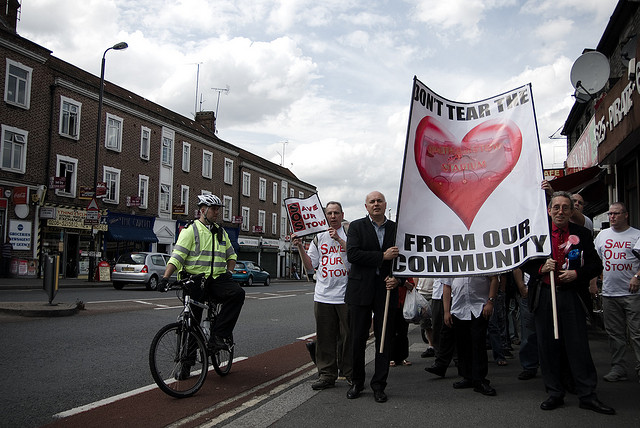
IDS
The Work and Pensions Secretary, Ian Duncan Smith, campaigning in his Woodford constituency (Credit: Gareth Davies, CC by 2.0)
The current imbroglio surrounding the Universal Credit scheme appears to be another example of what Crewe and King have recently identified as a long line of policy blunders in the UK.  The accusations being levelled at Iain Duncan Smith and his department are serious.  They illustrate both problems of implementation and reoccurring questions surrounding accountability.